Presenting: Ingrid Folkers and Her Inspiring Story of the Camino de Santiago
Travel & Transitions
Ingrid Folkers and I connected via Facebook some time ago and we
realized we that we both share the same birth country – Austria – and
both of us have been living in or close to Toronto for many years. Last
year I also found out that she went on a pilgrimage in 2012 on the
famous St. James Way or Camino de Santiago, a topic that has long
fascinated me. Ingrid is good friends with Mony Dojeiji and Sue Kenney,
both inspiring women for whom a pilgrimage on the Camino has been life
transforming. Recently, Ingrid and I had a chance to get together in
person, and I learned that the long walk on the Camino de Santiago had a similarly deep impact on Ingrid. Have a look here at her fascinating story:
1. Please tell us more about yourself and your background. Where are you from originally and what made you come to Canada?
I was born in Villach/Austria, a town with ancient roots, build on
the river Drau and surrounded by mountains. Even as a very young child I
liked to travel. My mother used to tell me I would go to stay with my
aunt and I never got homesick. I was the only child and at the age of
20, left Austria for Canada as a landed immigrant. I needed to spread
my wings and initially did not plan on staying long. Just long enough
for my father to give me permission to attend University. My father
died a year after I left home and by that time I had fallen in love with
Toronto and I stayed in Canada.

Ingrid Folkers on the Camino de Santiago
2. You have had a very interesting and diverse career. Please tell us about your diverse work experience.
I was trained as a Hotelier/Chef in Austria, and worked for some time
in the Hotel industry in Toronto. However, I first started as a Nanny
in Forest Hill and eventually worked in a variety of jobs, including the
University of Toronto. I got married and had 2 children and became a
stay at home mom. During my time as “Mom” I explored some of my artistic
talents, ran a porcelain study at home, and also had a 24 year
successful career with Tupperware Brands Corporation.
3. More recently you embarked on a career as a tea sommelier. Please tell us more about this unique profession.
About 8 years ago, I attended a workshop at George Brown College
called the Pleasure of High Tea. I was hooked and enrolled in a 2 year
Tea Sommelier Certification program in 2009; I graduated as one of the
first Certified Tea Sommeliers in Canada. With my hospitality
background and my new found passion, until recently, owned a small
company called Tea Occasions, offering Afternoon Tea events and
educational seminars in my client’s home. I continue to speak and teach
on anything Tea and occasionally host Afternoon Tea for my friends.

Ingrid’s travelling tea set
4. In 2012 you decided to embark on the Camino de Santiago. What motivated you to do this?
This is a question that has no simple answer. I found out about the
Camino about 5 years ago, through my friend Sue Kenney who has now
walked the Camino yearly for about 12 years. 2012 was an important
year for me, I was turning 60. I originally had plans to go to the
Spring Tea Harvest in China, and when those plans fell through, I
changed my ticket for Spain and on September 5, 2012 I took my first
steps on the Camino. Once I had made the decision, the Camino took
over. It was difficult to concentrate on my day-to-day life, I was
consumed with finding out everything about it. Added to know all about
it was the inner voice that kept reminding me about some items that had
been bequested to me by my parents and childhood memories long forgotten
got stronger. More and more it felt like I was not only making this
journey for myself, but also to finish a quest.

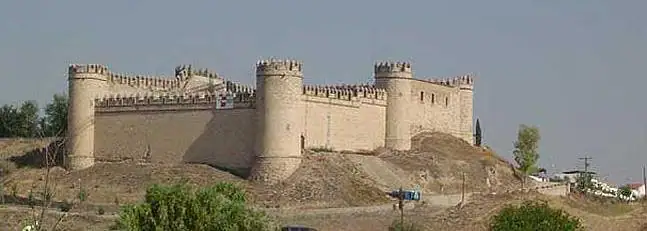
Castillo de Villamayor de Monjardin in the distance
5. The Camino de Santiago is over 800 km long. How did you prepare for this trip?
Initially, I read every book written about the Camino, I joined
online forums to talk to veteran pilgrims and “want to-be” pilgrims like
myself. I went on a shopping spree for the necessary pilgrims gear,
started walking every day, eventually walking between 10 to 12 km before
breakfast. Somehow, through Facebook connections, I became friends
with a wonderful group of Camino experts, here at home as well as in
Spain. With their guidance, by the end of August, I was physically and
mentally ready. To my surprise, I was not as prepared as I thought I
was.

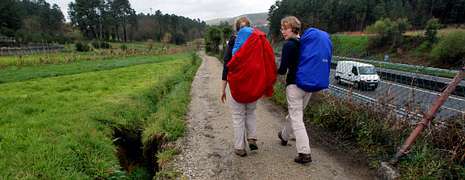
Camino markers along the way
6. Please tell us about the first portion of your trip. What was it like to embark on this long journey?
My plan was to walk an average of 20 km per day and walk the route by
myself, as a pilgrim, carrying my backpack and sleeping in albergues
and refugios, the hostels established all along the 800km. I also
planned to stay in Casa Rurales, the Spanish B&B’s or hotels once in
a while. I decided to fly from Toronto to Paris and then travel by
train to Bayonne, in the south of France, then take the train to Saint
Jean Pied de Port, the starting point on the French side of the Camino
de Santiago. I had booked hotel accommodations for the first 3 nights to
sleep off my jetlag and to ease into being a pilgrim.
Not everything went according to my plans. My plane got delayed by 12
hours, which made me miss my train connection to the South of France. I
spend 400 Euros for a 1 way ticket to Biarritz to keep on track. The
room I had booked in Bayonne was worse than any accommodations I
encountered during the rest of my trip. Once in SJPD, I collected my
pilgrim’s passport/credential, a document given to each pilgrim to
collect stamps at each albergue, as proof that you are walking.
In the mid-day heat (not recommended) I started the steep climb up
the Pyrenees to my first overnight stay. I thought I was prepared;
NOTHING prepared me for this ascent. There were times that afternoon
that I thought this to be my first and last day on the Camino. The first
week on the Camino I now fondly call my Camino Boot camp. Those were
some of the most difficult days but also very rewarding.

Ingrid in the woods past Sarria
7. Please tell us a bit about the practical aspect of walking 800
km. How much did you carry? Where did you stay overnight? What about
food, laundry and other practical matters?
My backpack weighed about 16 lbs, it included 2 of everything in
clothing, a fleece/silk liner I used as a sleeping bag, minimal
toiletries, a small first aid kit, Tilley hat, sandals, camera,
chargers, voice recorder, my tea set and lots of tea, raingear. I also
wore a fanny pack that held all the things I would need during the day,
i.e. money, some snacks, water. I walked with a pilgrims staff for
support.
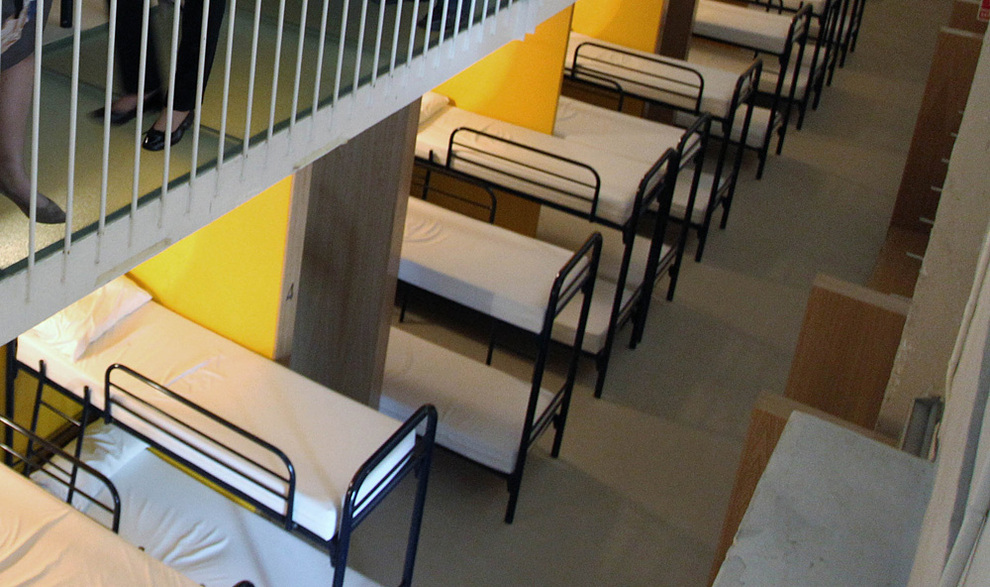
Albergues and refugios run by the municipalities and churches offer a
mattress or a bunk bed as sleeping accommodation. Rooms are shared
sometimes with as many as 80 people. The fee for a bed ranged from 5 to 8
Euros a night or “donativo” which means you give what you can. Private
Albergues are a mixture of private rooms and shared accommodations.
They have more amenities and cost a bit more and can be booked in
advance. Then there are Casa Rurales, those are B&B’s, charging
anywhere from 25 Euros upwards including breakfast and dinner. Hotels
are usually available in the larger towns and offer pilgrim rates.
Most albergues have washing machines for laundry. Showers are often
co-ed. Some have communal kitchen, others offered a cooked meal for an
extra fee, but mostly one eats in local restaurants asking for a Menu de
Dia. Along the walk, there are many bars that offer a place to rest,
have a café con leche, sandwiches, alcoholic and non-alcoholic
beverages.

Ingrid at the Alto de Perdon
8. What kind of people (and animals) did you meet on the trip?
As I had decided to walk on my own, I had the choice to either walk
by myself or walk with others. I just read the statistics for 2013,
there were 200,000 Pilgrims arriving in Santiago de Compostela,
walking the various Camino routes. With that many pilgrims walking, one
actually never walks alone. Sometimes I walked with the same people for
a few days, only to lose them for weeks and then meeting up again. I
met some very interesting people, all ages, people with lots of money or
no money at all, various religious beliefs, physical size and shapes,
loners and chatty. We all had a common goal: to reach Santiago – and
that created a unique bond.
I had read about the “wild and dangerous” dogs of the Camino… I saw
none. However lots of farm animals as I walked through the small towns
and they had the right of way.
9. You decided to record your experiences. How did you do that?
What difference did recording this experience make to you while on the
Camino and afterwards? What does it mean in retrospect?
I had decided to walk without cell phone or other tech gear. I even
lost my watch 2 days into my journey. I stayed away from computers for
the longest time and eventually started writing on Facebook to keep in
touch with my family and friends. All along I was voice recording as I
walked. I was not writing a journal, like so many other pilgrims, I
wanted to record what I saw with my camera and what I felt with my
voice. As it turned out, those recordings are a wonderful time capsule
and wonderful memories of my transformation from tourist to pilgrim.
They are an invaluable resource in my writings.
1. How did you stay in touch with people on the Camino? And what
role did social media play in connecting with people afterwards?
In Burgos, about 300 km into my walk, I bought a Spanish cell phone
so I could be reached in an emergency. This was a very good decision on
my part, because not long afterwards, I was injured and needed the phone
to keep in touch with my Spanish friends and whenever I needed to make a
reservation. In most places I had access to a “pay per minute”
computer and as time went on, I started to write about my days on
Facebook.
I had decided that I would not ask for contact information from
pilgrims, however, I handed out a teabag with my information to those
pilgrims I felt a deeper connection with, leaving it up to them to get
in touch with me.
Once I came home, I took time away from the computer to reflect on my
experience. This was a necessary step to walk back into my “normal”
life. After some months I created a Forum group Camino Gifts of
Friendship. It started with a few dear Camino friends and gradually
other fellow pilgrims got in touch with me. Somehow, the ones that were
meant to find me, did, approximately 50 people and we continue to be in
touch.

Ingrid Folkers, entering Molinaseca
2. You also mentioned that somehow walking on the Camino and
meeting with people from all different nations enhanced your language
skills. Please explain.
My mother tongue is German, but I also was taught English and French
in school. My mother was born in Slovenia and as a child I got familiar
with that language. Living close to Italy, I had a smattering of
Italian and a polite phrasing of Spanish. Today my primary language is
English, and I speak German with my mother-in-law and rarely use any of
the other languages. About 1 week into my Camino, I noticed that my
languages were coming back, more fluently than I could have ever
imagined. This ability to speak a variety of languages enhanced my
Camino experience. Very few of the Spanish people I met spoke English,
but among the pilgrims, English was spoken. However, the most important
language on the Camino is the language of the heart. A friendly smile, a
happy Buen Camino, a hug when needed and being gracious to ones host
and fellow pilgrim mattered more than being fluent in any language.

The ruins of the Refugio San Anton
3. One important person you met was “Stuart”. Please tell us about him.
Stuart I met the last few days before reaching Santiago. Stuart now
is 82 years old and truly a Camino veteran from Scotland. He also over
the years has served as “hospitalero” for many years. Hospitaleros are
the volunteers that keep the albergues running. He was instrumental for
me reaching Santiago on my birthday, something I thought no longer
possible after my injury. He coaxed me along when I was about to give up
for the day. He was one of the many Camino angels I met. We have kept
in touch via email and even though he told me that this was to have
been his last Camino, he again walked this year. The Call of the Camino
is very strong for some.

Pilgrim’s shadown on the Meseta
4. Several hundred kilometers into the trip you had an accident. What happened and what did you do from there?
About 3 weeks into my walk, on the Meseta, a section of the Camino I
did not enjoy, I decided to take an alternate route called the Calzada
Romana – The old Roman Road. This is a road very few pilgrims choose
and perfect for me since I wanted to walk alone for a while. On
September 29, after about 10 km, my left ankle hurt. One step I was
fine, the next step I barely could walk. I was totally alone, just like I
wished. The Camino provided.

Ingrid with the statue of the Injured Pilgrim in Leon
5. Pilgrims often say “The Camino provides”. Please explain that saying.
There is a saying about the Camino “The Camino provides”. Another
saying is that “The Camino Listens”. It is prudent to be careful what
one says or thinks. Some people call it coincidence, I call it Camino
Magic. I ran out of water, no town in sight, but all of a sudden there
was a fountain. I needed a stone to sit on, there was a boulder, on that
lonely stretch I needed help and there she was for me, a Ukrainian
pilgrim who happened to be a foot specialist. With her help I was able
to hobble to a small town called Reliegos and from there got taxied to
the emergency department at a hospital in Leon for x-rays. I was told I
was ok, to take it easy for a few days and continue when I felt better.

Ingrid at the Cruz de Ferro
6. You also encountered many acts of kindness on the Camino. Please tell us about some of these.
From Leon onwards, my Camino changed. I no longer could walk the
distances as before, I walked very slowly, much slower than the slowest
pilgrim, so I walked alone most of the time. Occasionally, a pilgrim
would walk with me for a few km, but quickly would walk onwards. Now I
relied on the help of the local people and help they did. They walked
with me, made sure I rested, fed me, hugged me when needed, looked after
my ankle, sometimes gave me a ride when I simply could no longer walk
and a town was far off. In return they ask me to hug the Saint for
them. “Un abrazo a Santos, por favor”. I carried a long list of names
with me. This was the time I was one with the path, I saw and heard
things that I would have missed walking as before. I was walking forward
by walking inward and on a journey back to myself.
I was in constant pain and didn’t find out until back in Canada, a month later, that I had been walking with a broken leg.

Just one more day to Santiago
7. Finally you reached Santiago de Compostela, on a broken leg.
What was that like? What does Santiago de Compostela mean to you?
With the help of my friend Stuart, I did walk into Santiago de Compostela on October 20, my 60
th
birthday. The Camino listened and provided. As I was walking the last
20 km, counting down every km, I re-connected with pilgrims I had not
seen in a long time. Somehow the word had gone out that it was my
birthday and all day long, pilgrims were whishing me Happy Birthday.
Reaching Santiago was magical and as I walked past the haunting
sounds of the Galician “gaita”, the Spanish bagpipe, that greets each
pilgrim walking through the doorway into the Prazo Obradoiro. It was a
jubilant and emotional moment. I had made it. After I presented my
credential at the pilgrims’ office I was presented with my Compostela,
the much coveted document confirming that I had arrived a pilgrim in
good standing. I walked into the cathedral, up the steps to the statue
of Santiago, hugging him and read out aloud all the names of the people
that had helped me along my Camino. I watched the huge Potafumeiro swing
and listen to the angelic voices of the nuns during pilgrims mass.
All together I spend a week in Santiago; it is a beautiful city and I am looking forward to visit again.

Santiago de Compostela – at last
8. After reaching Santiago you also continued on to Finisterre (or Fisterra in Galician). Please tell us about that.
For most Christians, Santiago is the end of their Camino. Myself, I
wanted to walk onwards to Fisterra and Muxia – the end of the World and
the Costa del Morte (Cost of Death). Instead of walking an additional 4
days, I took the bus to Fisterra. I also visited with my friend Tracy
Saunders, an ex-pat British/Canadian, who has made her home in Galicia,
and has a post-Camino retreat called The Little Fox House. In her
peaceful home, I started my new Camino, my journey home. In her company
we drove along the Costa del Morte to Muxia. Standing on the stones in
Muxia felt like coming home. All along, I felt that my parents,
especially my fathers’ energy, had been walking with me and the quest
part of my Camino was resolved.

Ingrid at Fisterra
9. Please tell us about the “culture shock” you experienced
readjusting to your regular life after your return. How has this walk on
the Camino influenced your life in the long run?
After I left Galicia, I flew to Barcelona to spend a few days there.
I got to see very little of it, my leg was not any better. I managed
to visit Montserrat and the Basilica de la Sagrada Familia and the
Market. Aside from the obvious physical challenge, I was not ready for
the noise of a tourist town. I had spent 7 weeks in solitude,
simplicity, away from noise and the hustle of everyday life. Barcelona
was hectic and noisy.
Once back home, it took me many months to focus on everyday life. I missed the simplicity of the Camino.
I have been back now for 13 months, however, there isn’t a day I
don’t think about my journey. It was life changing and like so many
pilgrims, I too long to go back. As profound as the journey was for me,
my everyday life has not changed much. I am part of a couple, a
marriage, a mother, but only I walked the Camino. Changes that I would
love to implement as a personal choice are not necessarily the choices
my family would welcome. The changes for me were a reconnection to
myself, a re-awakening of those dreams most of us set aside as life
takes over. Just as one walks the Camino de Santiago, step by step, so
too I am now walking my Camino of Life, step by step with an open heart
and mind. It is a more quiet life and filled with new dreams.

Statue of St. James inside the cathedral of Santiago de Compostela
10. You are also planning to return to the Camino de Santiago next
year. Please share with us your plans for this upcoming journey.
Hopefully, in 2014, I will be able to do so. I would like to walk
some of the sections I was not able to, and add a few other Caminos,
i.e. Camino Del Norte, Camino Ingles, Camino Finisterra and possibly the
route in Portugal from Porto. I have set aside 3 months to spend in
Spain, walking and serving as hospitalera.
Since I know the Camino listens and this Pilgrim would love to
return, I believe the Camino will provide. Buen Camino a todos –
Ultreia!

Ingrid’s Compostela – the pilgrim’s document
Thank you, Ingrid, for sharing your amazing Camino experiences with
us and we hope to have an update from you from your upcoming trip to
Spain. Happy travels…